Hazelnut Tree Borer (HTB) : Double the Damage
So, you think Biological Control is for the birds? You might be right. Read on.
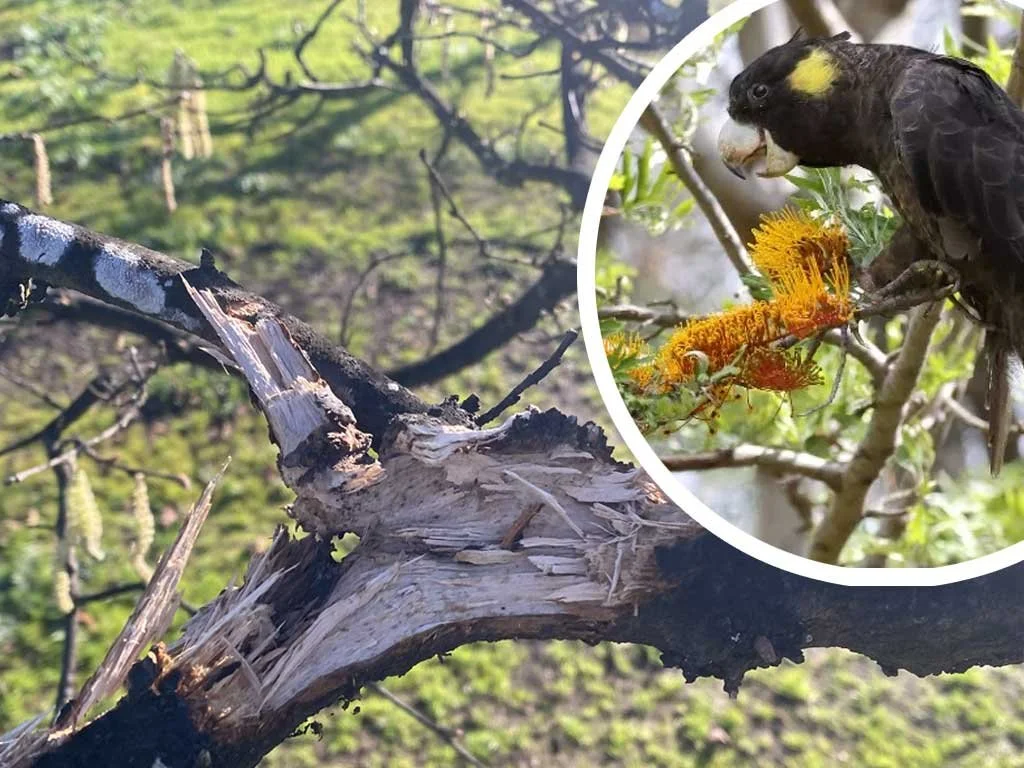
Used with permission : MH, Nutrien Ag Solutions Longford Tasmania © 2026
An agronomist colleague in Tasmania sent me these photos last week — and they make a compelling case for keeping Hazelnut Tree Borer (Maroga melanostigma) pest populations as low as possible.
The burrowing pest larvae are proving irresistible to hungry black cockatoos, who have discovered a rich, winter source of protein and fat buried deep inside tree trunks and limbs. While cockatoos may remove some of the pest larvae, the cost to tree health and structural integrity can be substantial. Cockatoos indiscriminately rip open bark and excavate trunks and branches in search of juicy borer larvae. The borer damages the tree from the inside. The cockatoos damage it from the outside. Once cockatoos discover a reliable food source, they can become regular “customers”, hanging around your orchard margins over winter. In our opinion, this makes HTB suppression even more important. Keep the HTB borer population down — and the birds may look elsewhere.
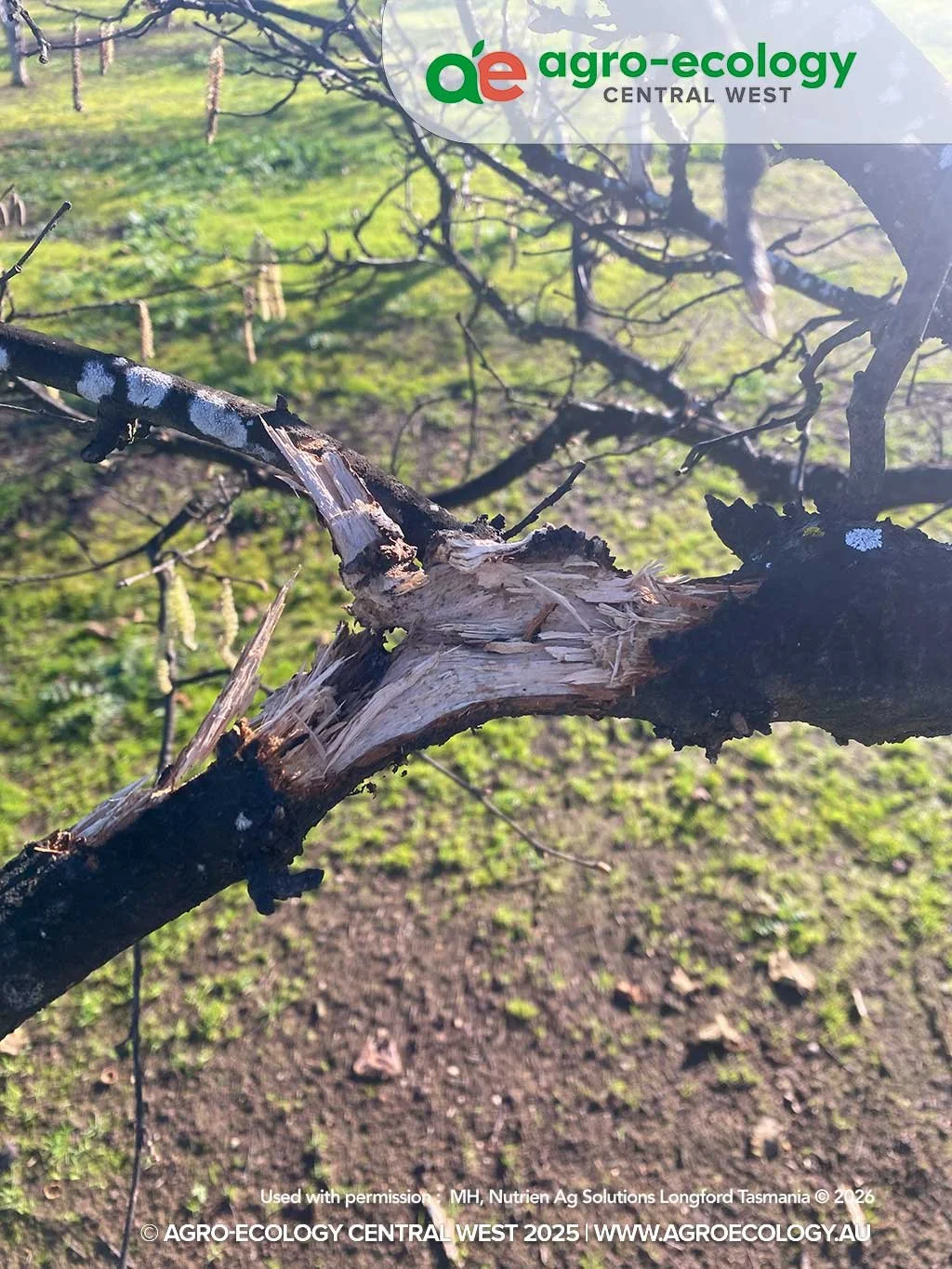
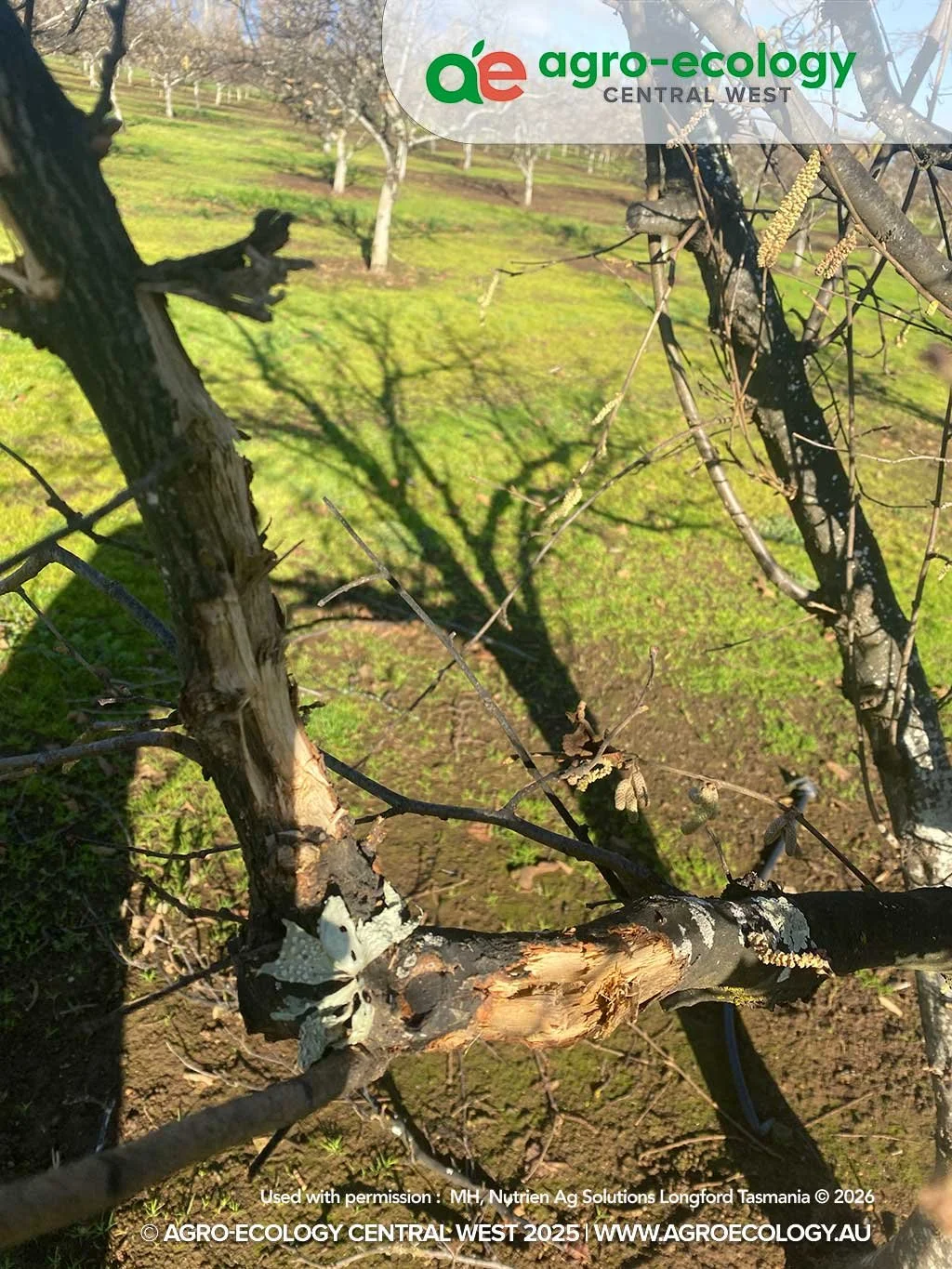
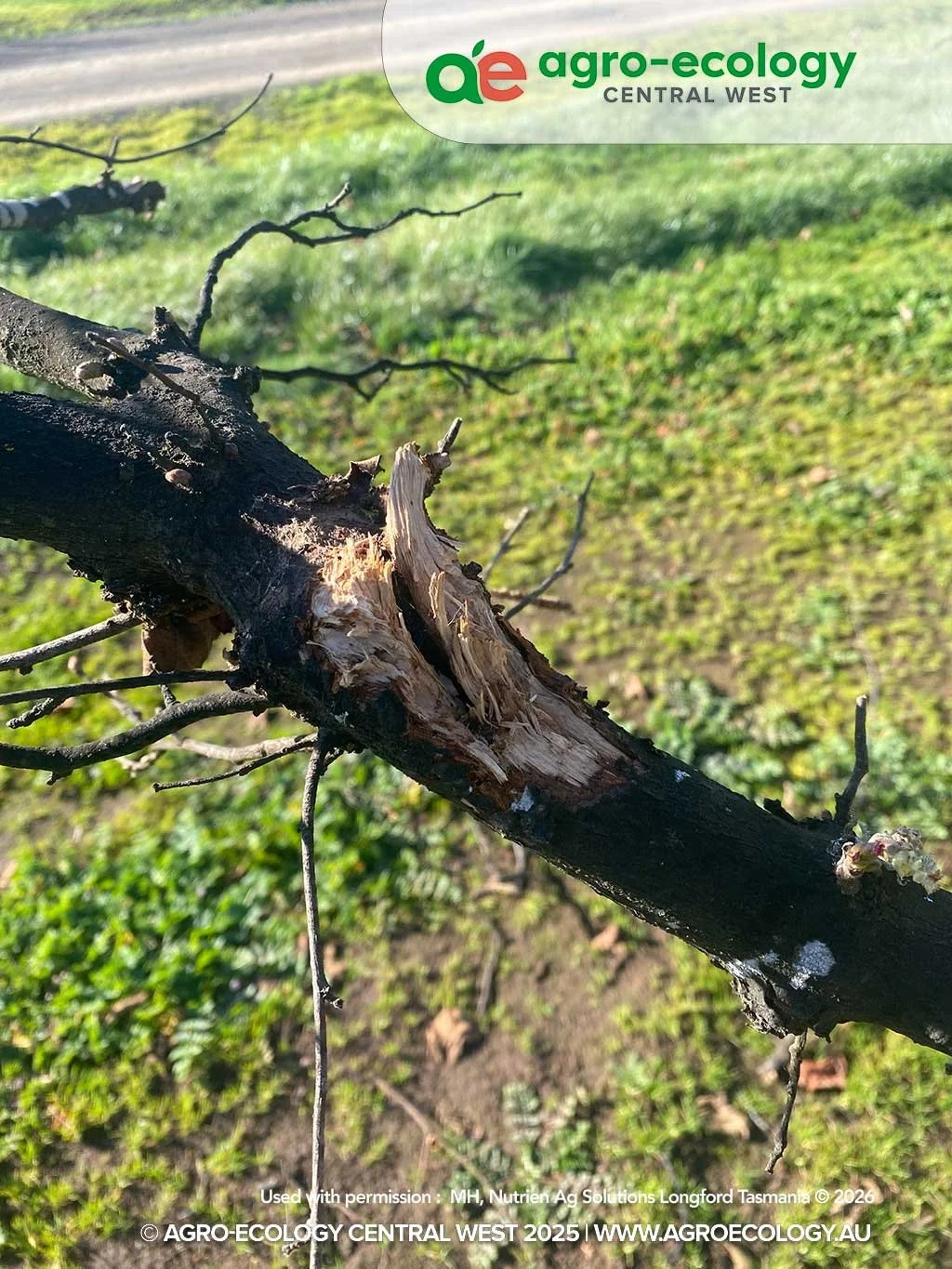
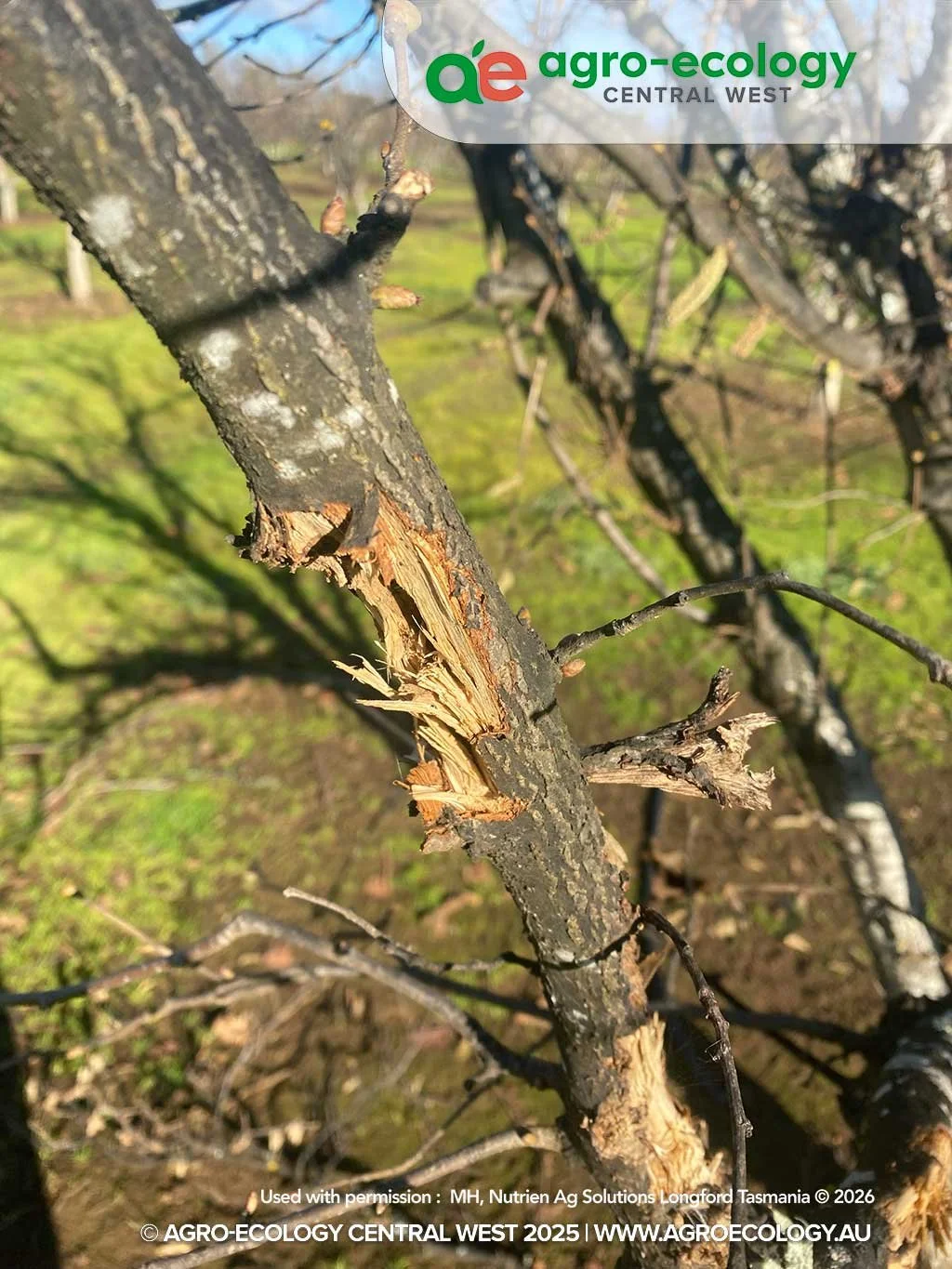
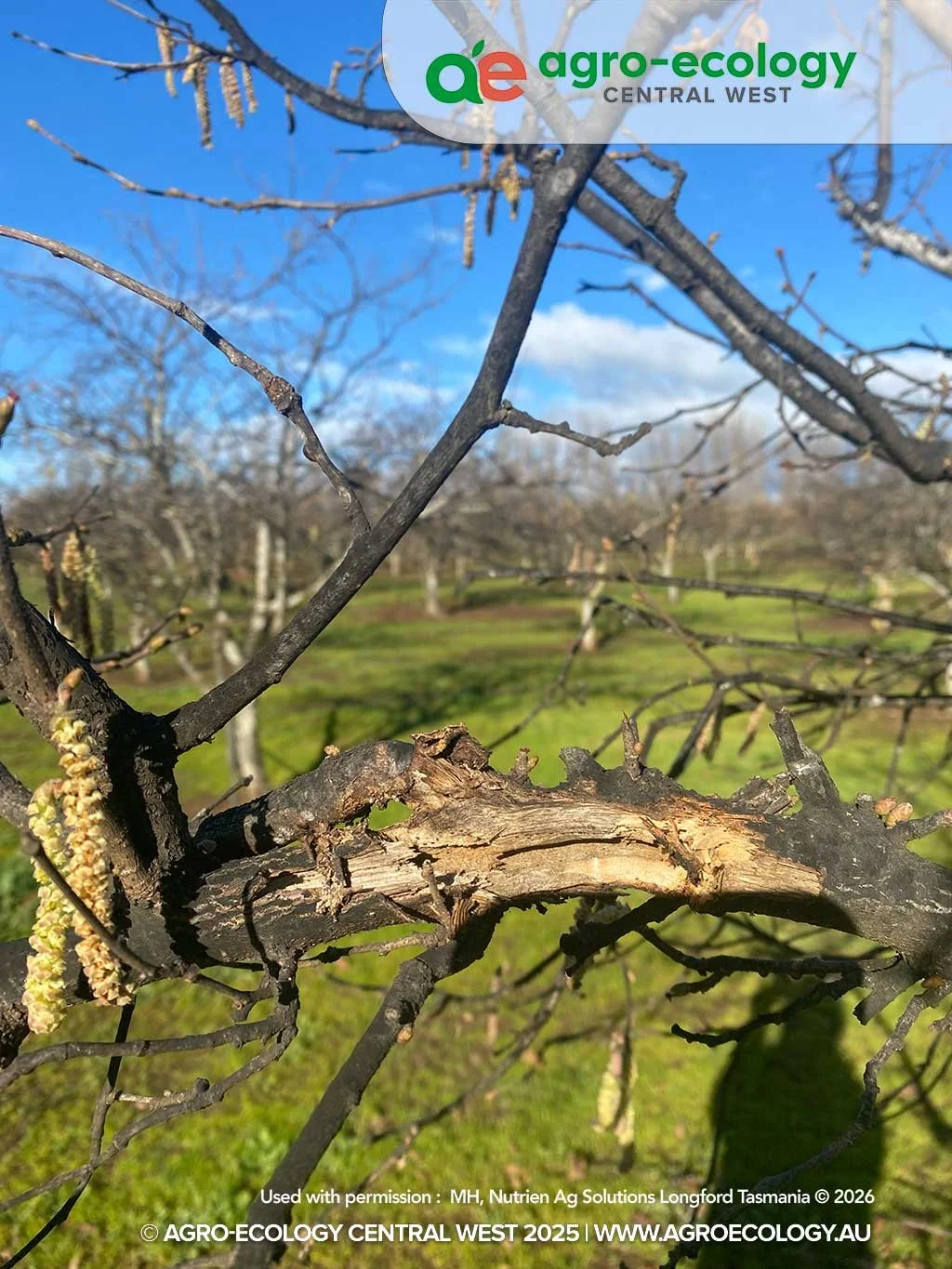
Images: used with permission : MH, Nutrien Ag Solutions Longford Tasmania © 2026
Inundate - Intervene - Inoculate
Low-level, year-on-year releases of beneficial insects can prove to be an important insurance strategy once larger pest populations have been brought under control. Augmented Biological Control (ABC) won’t eradicate every borer in your orchard, but it will hold pest populations low enough so that they don't become a significant food source for cockatoos in the first place.
Control the pest early.
Keep populations low.
Don't wait for the problem to become obvious.
Because with Hazelnut Tree Borer, the damage may not stop with the insect. Sometimes, the birds are waiting for dessert.