Hazelnut Aphids - Alert but not Alarmed
Active Agronomy : Aphids in Autumn
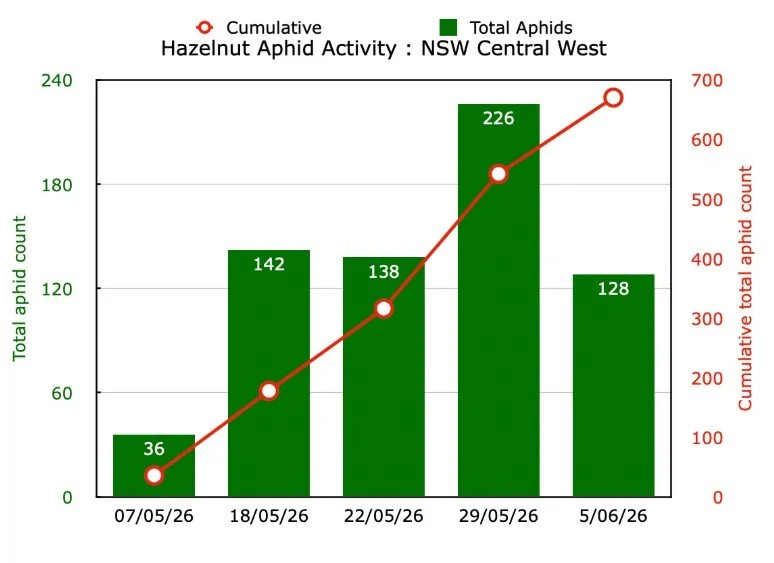
Just how much of a pest are hazelnut aphids really? I’d been led to believe by a number of local growers and from industry published material that while relatively common, “aphids aren’t really a problem” - which could still be true but being curious, I continued to check for the pest, for another 4 weeks.
I followed a modified Oregon State University sampling plan for the pest.
https://pnwhandbooks.org/insect/nut/hazelnut/hazelnut-aphids
“Check three terminal branches per tree and three leaves per terminal. Count the number of aphids per leaf” - 5 trees per sampling date. (Orchard size ~1,000 trees)
Results / Key takeouts
All trees presented with some aphids. I couldn't find a single tree without aphids, even as tree leaf numbers reduced week-by-week.
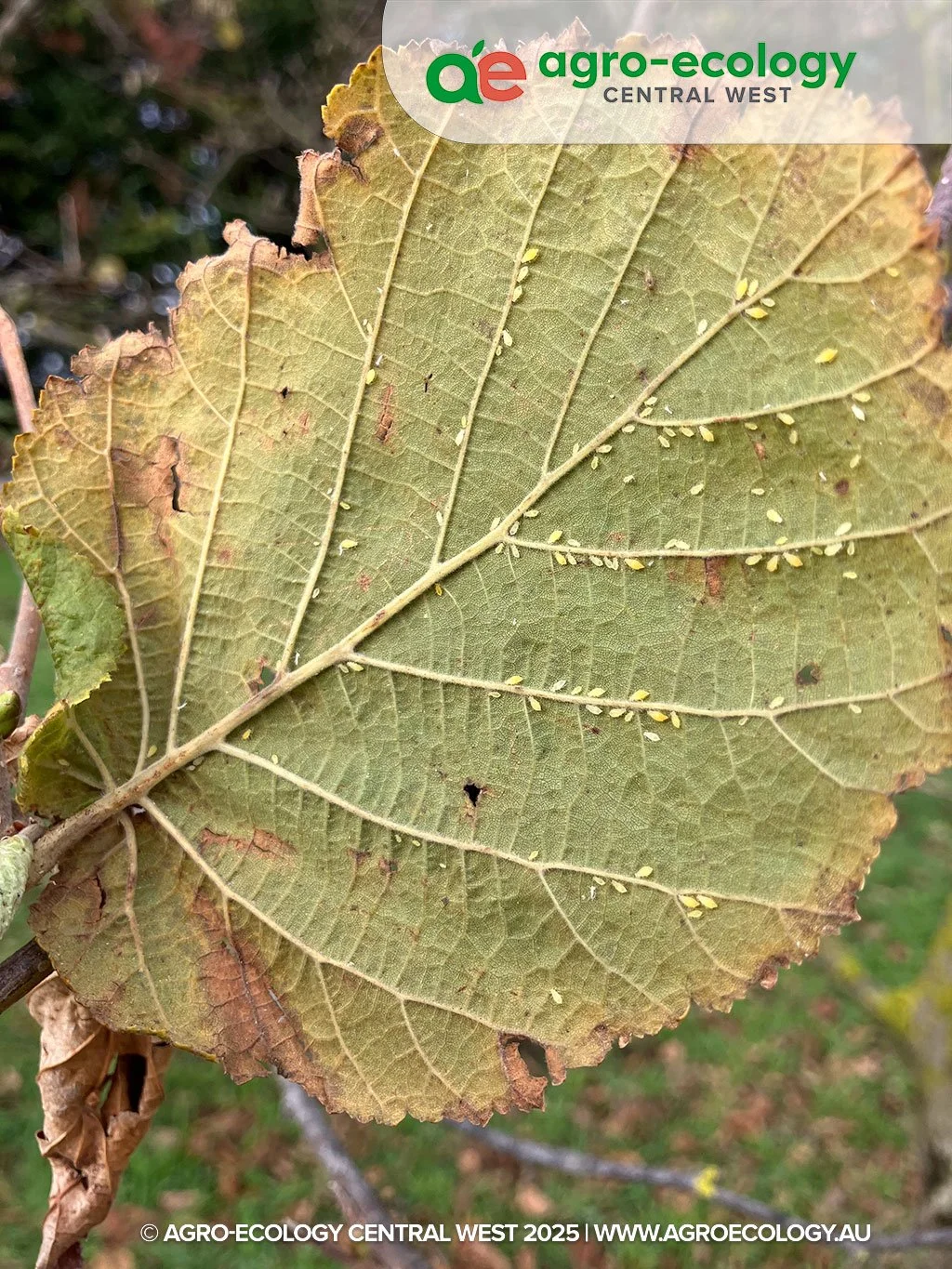
The highest single leaf count (the above photo) was more than 65 specimens. The leaf was one I picked up outside of the sampling regime walking back to the car! - so it didn't count in the “official survey”. See more pictures in the Aphid Gallery @ : www.agroecology.au
If you look at the spatial data close enough and squint a bit! You can almost see a trend where trees at the orchards margins showed a higher aphid count. Growers should pay particular attention to reducing weedy orchard margins well before spring. (see image below)
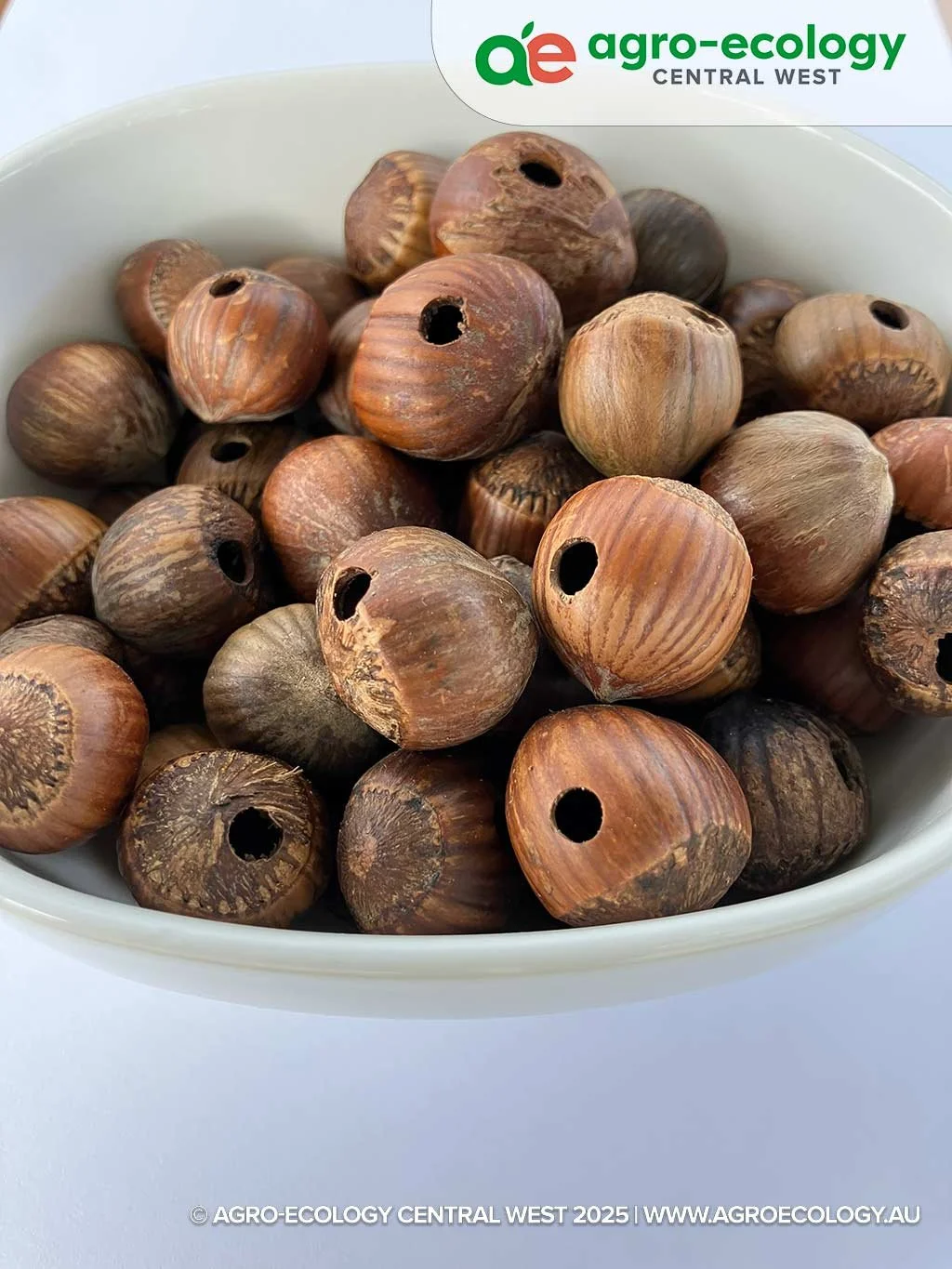
My attention was also drawn to the understory of this orchard. I seemed to be able to find a disproportionate amount of “blanks” - empty nuts. I’ve read that cumulative aphid damage over several seasons is thought to contribute to reduced nut fill and smaller sized nuts. I drilled out some specimens to confirm they were “blanks”.
Strangely perhaps, I couldn't find any evidence of aphids being parasitised. Parasitism can usually be observed as “mummified” aphids. “Mummy’s” appear as bronze coloured “shells” of dead aphids that once hosted developing parasitic wasp larvae.
My good friends at CESAR (cesaraustralia.com), dna sequenced some of the collected aphid specimens to confirm their identity. (Myzocallis coryli (Hazel aphid).

Autumn 2026 Distribution of Hazelnut aphids (Myzocallis coryli) Map used with permission
In this instance, the team were unable to screen the specimens for insecticide resistance, but made a comment in some personal correspondence that, “this species is known to have resistance to multiple insecticide classes in the US. (https://www.pesticideresistance.org/display.php?page=species&arId=126).
It therefore wouldn’t be surprising if this species came into Australia already carrying one or more resistance alleles”.Have any growers experienced an aphid spray failure in recent times ?
Citizen Science @ Work : See for Yourself
If you're really curious, cut and paste the pest aphid dna into BOLD (Barcode of Life Database). BOLD is one of the world's largest DNA databases. Sequences can be compared against known “reference specimens” for confirmation. Changes in the pests genetic composition can be tracked. This is where insecticide resistance starts!
GGGTCTCCTCCTCCTGAGGGTCAAAGAATGATGTATTTAAATTACGATCTGTCAAAAGTATAGTAATAGCTCCTGCTAAAACAGGTAATGATAAAATTAATAAAATAGCAGTAATAAGGATAGATCAAGGAAATAATGGGATTTGATTTAATTTTATATTATTAGGTATTATATTAAGAATTGTACAAATAAAATTAATTGCTCCTAAKATTGATGAAATTCCTRCAAGATGAAGGGAAAAATTTGTTAAATCTACTGAAATATTATTATGAGCAATATTRTTAGATAAGGGTGGRTAAATAGTCCATCCCGTCCCTGTTCCATTATWAATTATAAAACTACAGATTATTATTATTAATGAAGAAGGGAGTTATCAGAATCTAATATTATTTAATCGTGGAAATGATATTCAGGACATCCTATTATTAAAGGAATTAATCAATTTCCAAATCCTCCAATTACAATAGGTATAGTTATAAAAAAAATTATAAAAAAAGCATGAATTGTTACAATTACATTATATAATTGATTATTATTAATAATTGAATTAATTTGTCTTAATTCTAATCGGATTAAGATTCTTAATGAAGATCCGATTATACCTGCTCAAATTCCAAATAAAAAGTATAATGTTCCATATCTTATA
Discussion & Insights.
In hazelnuts, aphid populations have two peaks - The first in Autumn, where the pests lay large numbers of eggs in and on bark, pruning cracks and bud scale. The second flush occurs in spring to early summer.The BOM is forecasting a warm 2026 spring. I’m going to be watching with interest, whether these cumulative aphid counts for autumn translate into a large spring/summer pest population. Aphid damage is caused by feeding on the underside of new leaf growth, and the production of honeydew, a sugary excretion readily colonised by sooty mould fungus.“Reduced nut fill and smaller nut size have been attributed to aphid infestation, however the long-term effect of pest aphid populations in hazelnuts is unclear”.“The aphids feed on phloem sap, draining the plant of essential sugars. Sustained sucking pressure reduces the trees vigour and its ability to store nutrients for the following spring, weakening the tree over time” “Damage caused by aphids is cumulative; benefits of [aphid] control might not be seen during the first season, but they become evident after two years or more.”
Dealing with Hazelnut Aphid pressures in other parts of the world
One of the most successful examples of invertebrate biological control; using an introduced “beneficial” species of insect to outcompete a pest comes from the hazelnut industry! For years Willamette Valley growers struggled with aphids. After careful study scientists released a parasitic wasp sourced from Europe into the Oregon region.“This parasitoid, a small Braconid wasp (Trioxys pallidus), has provided nearly complete biological control of the filbert aphid and has almost eliminated insecticide use for this pest.”
Call to Collaborate
Could year-on-year low to moderate aphid pressure be contributing to flattened or declining nut yields?
AECW is interested to hear from growers about
i) aphid pressures in past seasons and their effect, if any, on yield, quality or tree health.
ii) aphid spray failures.
Internationally aphid research is ramping up.
Aphids are considered one of the most economically important crop pests.
They are known to carry more than 300 plant-pathogenic viruses.
Almost all insecticides used to control the pest are experiencing loss of efficacy due to resistance.
Current predictions show that global environmental changes could influence the pests range expansion and physiology.
The Food & Agriculture Organisation considers aphids a major threat to global food security.
If you're a student, researcher or institution with an interest in aphids, applied ecology and biological control, let's talk!